
Reinforced Concrete (RC) Works
Piled Rafts • Ground Beams • RC Walls
Reinforced Concrete (RC) Works
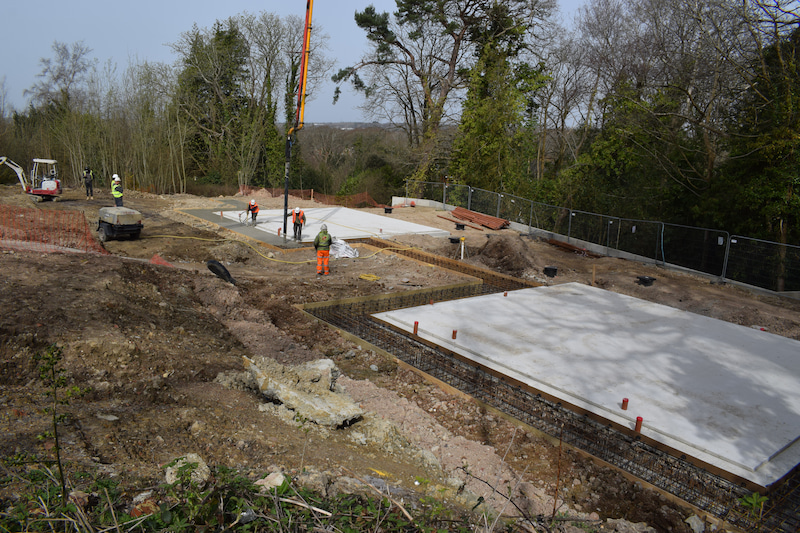
At Ancora Foundations, we don’t just install piles — we deliver the complete foundation solution. Our reinforced concrete (RC) teams provide everything from piled rafts to ground beams and retaining walls, giving clients a single, reliable contractor to handle their entire substructure package. Whether you’re building an extension, a residential block, a commercial unit or a basement, we offer fast, cost-effective and high-quality RC construction tailored to your project.
Piled Raft Foundations
A piled raft spreads loads across a reinforced concrete slab supported by piles, giving you a strong, stable foundation even on poor ground.
Non-Voided Piled Rafts
Ideal where a raft can sit directly on the formation:
- Perfect for new-builds, commercial units and residential blocks
- Great for sites with soft or variable ground
- Keeps settlements low and structure stable
Voided Piled Rafts
Used where ground movement or clay heave is a risk:
- Protects buildings from upward ground pressure
- Essential in clay areas, near large trees or shrink-swell soils
- Complies with NHBC heave requirements
Piled RC Beams (Ground Beams)
Piled reinforced concrete beams span between pile positions, transferring loads into the ground without major excavation. Ideal for house extensions, new-build homes, and boundary-line builds.
Why they work so well:
- Minimal ground disturbance and clean installation
- Perfect in poor soil conditions
- Fully reinforced for long-term strength
We handle everything: shuttering, steel fixing, concrete pour and finishing — all to the highest standards.
RC Walls & Structures
Retaining walls, basement walls, RC frames, and containment structures integrated with your piling system.
Complete Package
Piling + RC = one contractor, no delays, reduced risk, and no coordination issues.